
Key Insights
Stock down 90% in one yearSAVEQ fell to below 60 cents in OTC trading, with market value collapsing from $535M to $50.9M in two years.
$6.79 billion in debt weighed heavilyAgainst only $1.02B in cash, Spirit could not survive rising fuel costs and weak creditor confidence.
17,000 employees affectedThe shutdown leaves thousands jobless and passengers stranded at the start of the busy travel season.
Fewer budget options for travelersSpirit held 3.4% of the domestic market, forcing larger airlines to compete on price. Expect higher fares ahead.
Key Metrics
| Metric | Value | Context |
|---|---|---|
| Total Debt | $6.79 Billion | vs $1.02B cash on hand |
| Market Cap (April 2026) | $50.9 Million | Down from $535M two years ago |
| Stock Decline (1 year) | -90% | SAVEQ fell below $0.60 |
| Domestic Market Share | 3.4% | Outsized impact on budget fares |
| Employees Affected | 17,000 | Across the entire network |
| Failed Rescue Amount | $500 Million | Federal rescue fell through |
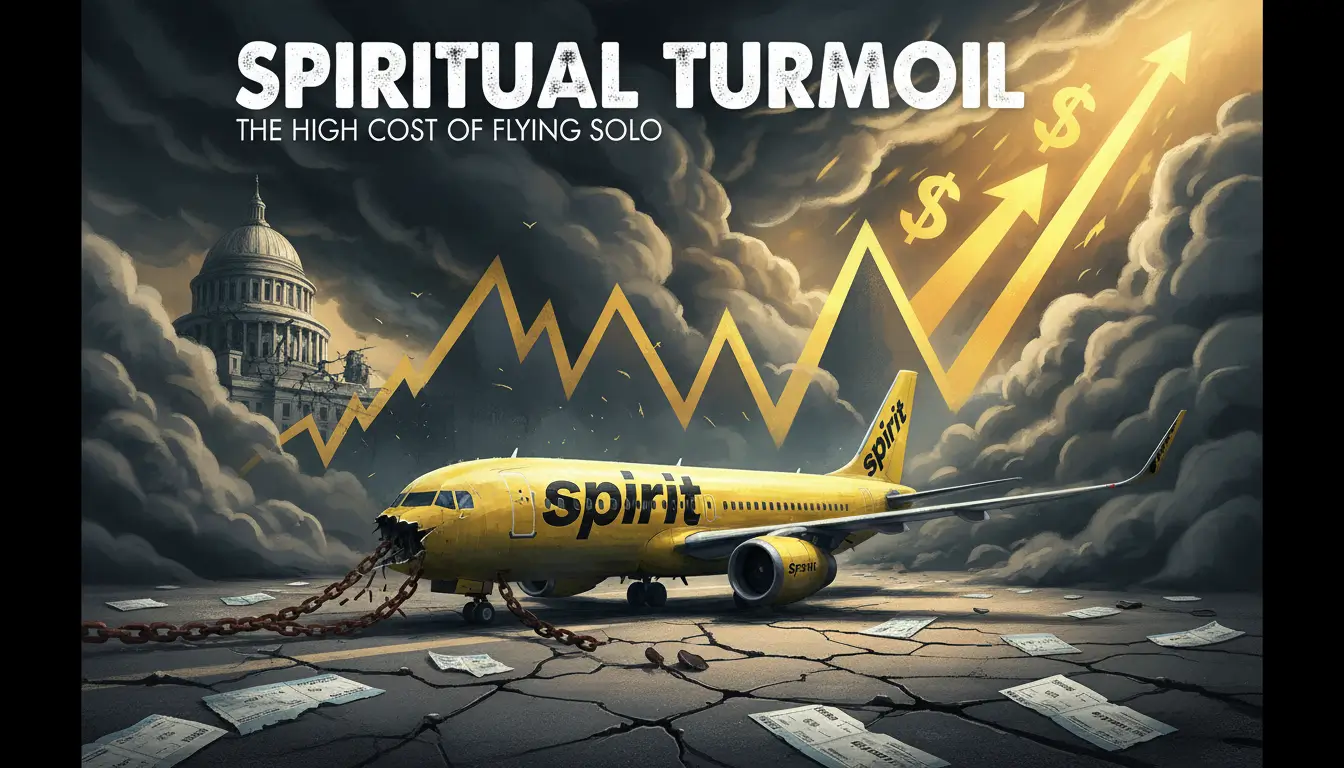
Spirit Airlines shut down on May 2 after failing to secure a $500 million federal rescue, ending a 34-year run for the ultra-low-cost carrier and wiping out most remaining equity value. The company canceled its remaining flights early Saturday, stranding passengers across the country and closing the book on one of the most troubled names in U.S. aviation. Shares of SAVEQ fell about 60% in over-the-counter trading to below 60 cents, leaving the stock down nearly 90% over the past year.
The collapse had been building for months. Spirit’s market value had shrunk to about $50.9 million by April, down from more than $535 million two years earlier. Against that, the airline was carrying roughly $6.79 billion of debt and only $1.02 billion of cash, a burden that left little room for error as fuel costs climbed and refinancing options narrowed. Its second bankruptcy filing in 14 months made clear that management was running out of time.
The final effort to keep the airline alive ended in talks with the Trump administration. According to reports, Commerce Secretary Howard Lutnick and Chief Executive Dave Davis held a brief call in which both sides acknowledged that no workable rescue remained. The administration had considered taking a 90% stake in the airline, but bondholders rejected the proposal, and officials ultimately concluded that Spirit’s assets were worth more in pieces than as an operating carrier.
That decision leaves investors with little realistic prospect of recovery. Spirit’s balance sheet had long signaled distress, but the speed of the final unraveling was still striking. A business once built around rock-bottom fares and high aircraft utilization could not withstand a combination of heavy leverage, rising fuel prices and weak confidence from creditors. By the end, the equity had become almost entirely speculative.
The shutdown will be felt beyond the shareholder base. Spirit accounted for roughly 3.4% of the domestic market over the past year, a modest figure on paper but one that carried outsized influence on pricing. Its presence forced larger airlines to compete more aggressively in leisure markets and on bare-bones fares. Without Spirit, that pressure eases.
The airline’s disappearance is likely to support higher ticket prices, especially in the budget and basic economy segments where it had been most disruptive. Frontier is already seen as a likely beneficiary, and larger carriers may also gain from reduced fare competition on routes where Spirit had a meaningful presence. For consumers, fewer choices usually translate into less pricing power.
The human cost is also substantial. About 17,000 employees are affected, and travelers with future bookings now face uncertainty while federal officials work on assistance measures. Competitors may absorb some demand, but replacing an airline’s network, staff and route structure is never seamless, particularly at the start of the busy travel season.
Spirit’s failure is a stark reminder of how fragile the ultra-low-cost model can be when debt is high and operating conditions turn hostile. The concept still has demand, but the margin for error is thin, especially for carriers without premium cabins, loyalty economics or stronger balance sheets to soften shocks. The next question for the industry is whether low-cost airlines can remain true to that model or whether survival will require a more flexible approach.