
Key Insights
Inflation impact: +0.5 to 0.8 percentage points to headline CPI over 6-12 months if sustained.
AI capex at risk: $650 billion in planned tech spending faces higher energy and borrowing costs.
Fed rate cuts delayed: futures markets now assign lower odds of easing by early autumn 2026.
Sectors hit hardest: transport, consumer discretionary, and manufacturing face margin compression.
Key Metrics
| Metric | Value | Impact |
|---|---|---|
| Crude price increase | +$20/barrel | Driven by geopolitics |
| CPI headwind | +0.5-0.8pp | Over 6-12 months |
| AI capex at stake | $650B | Big Tech 2026 spend |
| Fed rate cut odds | Declining | Lower probability by autumn |
| Bond yields | Rising | Traders reprice rate path |
| Most exposed sectors | Transport, consumer | Fuel-sensitive margins |
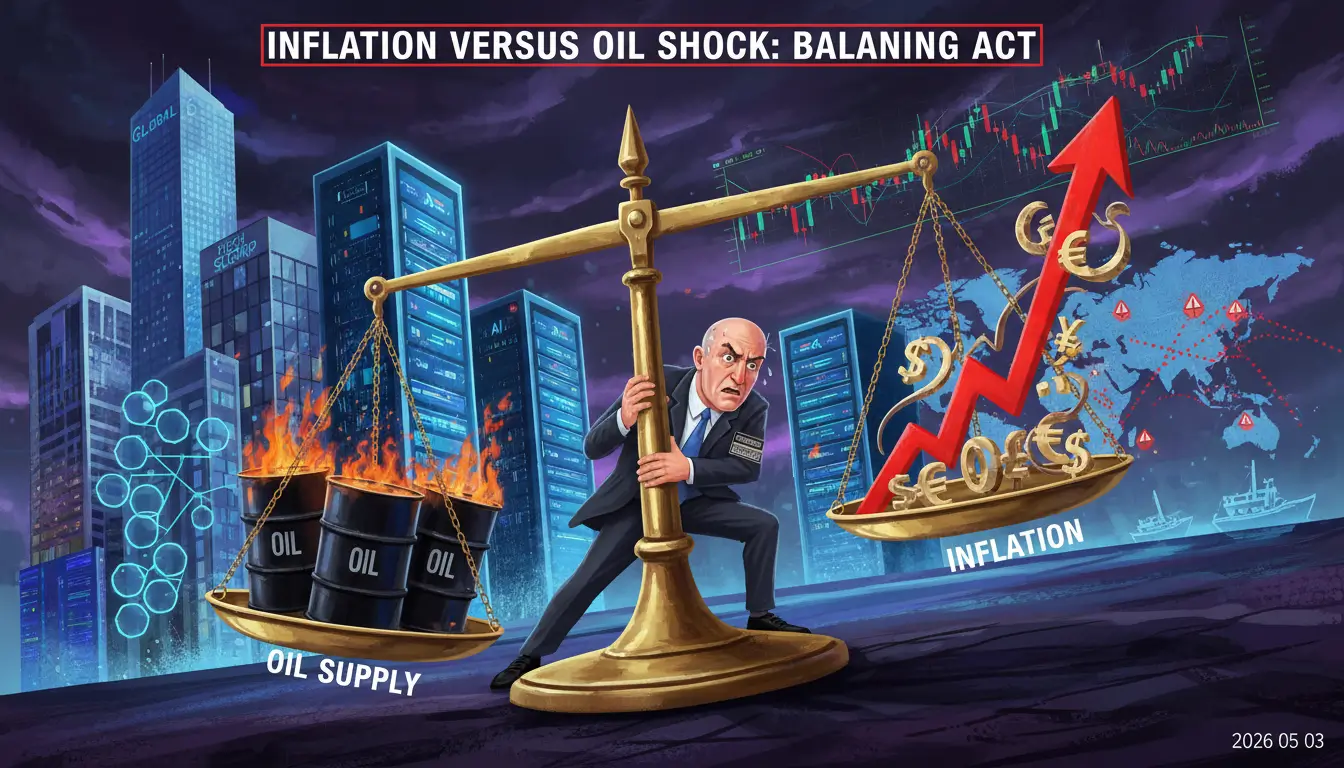
Rising oil prices are complicating the U.S. inflation outlook just as investors had begun to expect a gentler path for monetary policy. As of May 2, 2026, the latest jump in crude, driven by renewed Middle East tensions and concerns over disrupted shipping routes, has forced economists to revisit forecasts for consumer prices, growth and Federal Reserve rate cuts. The timing is awkward. Corporate America is already preparing for unusually heavy capital spending, with major technology companies expected to invest about $650 billion this year in AI infrastructure, leaving the economy more exposed to any fresh increase in borrowing and input costs.
Markets have reacted quickly. Oil benchmarks have posted sharp gains in recent sessions, while equities have turned more volatile as investors reassess how long inflation may stay above the Fed’s comfort zone. Energy shares have outperformed, but transport, consumer-facing businesses and other fuel-sensitive sectors have come under pressure. Bond yields have also moved higher as traders scale back expectations for rate cuts later in the year.
The inflation problem is straightforward. A sustained $20 rise in crude prices could add roughly 0.5 to 0.8 percentage point to headline inflation over the next six to 12 months, according to estimates widely used on Wall Street. That may not sound dramatic, but for a central bank still trying to anchor inflation near 2%, it is enough to alter the policy debate.
Energy costs do not stay confined to the pump. They flow through freight, manufacturing, food distribution and household utility bills, eventually feeding into a broad range of consumer prices. April inflation data are likely to show the first signs of that pressure, with the risk of stronger pass-through over the summer if oil remains elevated.
This arrives at a moment when another source of cost pressure is already building. The AI investment wave is creating intense demand for semiconductors, data-center equipment, power and specialized labor. If energy prices keep rising alongside that spending boom, companies may face a more difficult mix of higher operating costs and higher financing costs. For some firms, especially those with narrow margins or large expansion plans, that combination could squeeze earnings and delay investment.
The Fed now faces a familiar but uncomfortable dilemma. Policymakers know that higher interest rates cannot produce more oil or reopen shipping lanes. Still, they also know that allowing an energy shock to seep into wages, prices and inflation expectations would make the problem harder to contain. Before the latest move in crude, markets had been leaning toward rate cuts later in 2026. That view now looks less secure.
Fed funds futures already reflect that shift, with investors assigning lower odds to easing by early autumn than they did just weeks ago. The likely result is a longer wait-and-see period from the central bank, especially if core inflation stops improving. Officials will want evidence that the oil shock is temporary before signaling any meaningful policy pivot.
For investors and executives, the message is less about panic than repricing. Energy producers stand to benefit, while transport, manufacturing and consumer discretionary names remain the most exposed. The bigger question for the second half of the year is whether higher oil proves to be a temporary geopolitical premium or the start of a broader inflation reset.
If crude stays high, growth forecasts will probably come down and the case for lower U.S. interest rates will weaken further. That would leave the Fed balancing two difficult tasks at once: preserving its inflation credibility while trying not to choke off an economy already facing rising costs.