
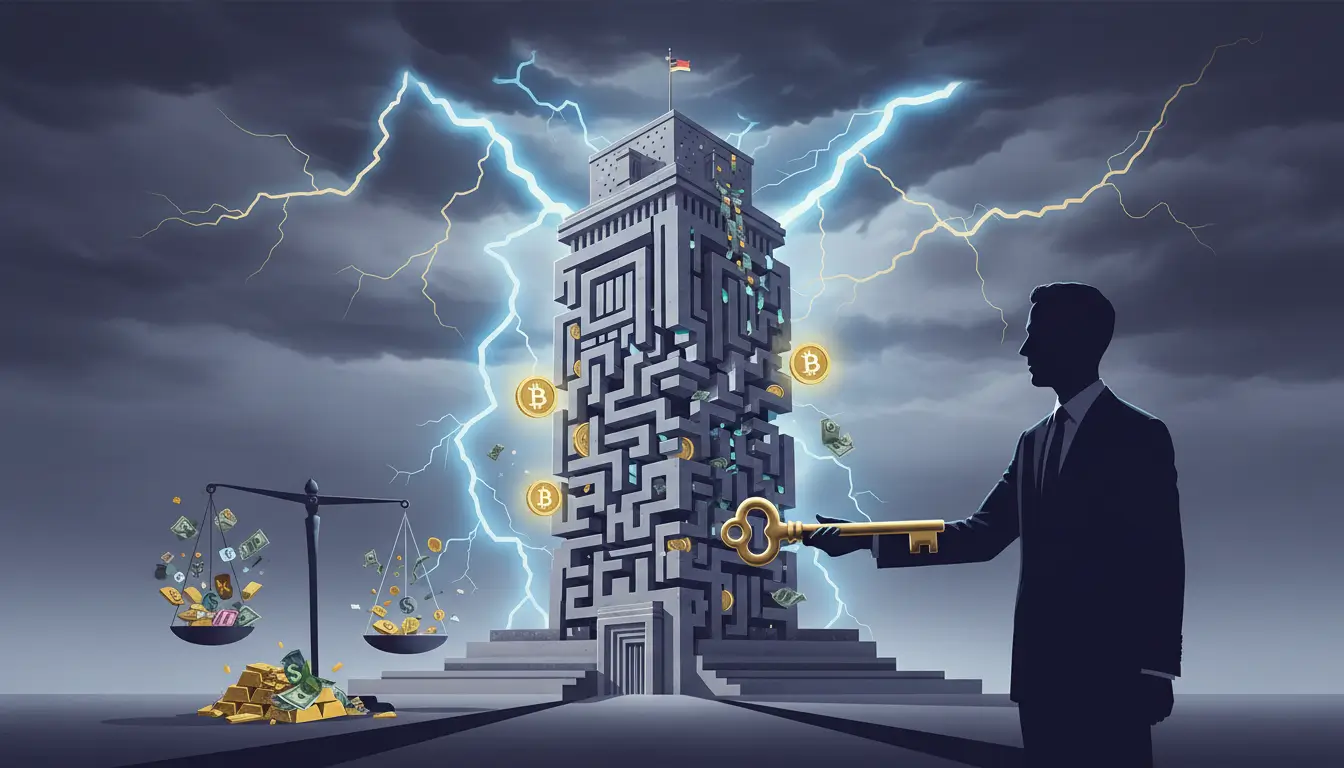
Kevin Warsh Confirmed as Federal Reserve Chair: A New Era in U.S. Monetary Policy
The Federal Reserve has a new leader, and markets are already trying to read the signal. On May 13, 2026, the Senate confirmed Kevin Warsh as the 17th chair of the Federal Reserve in a 54-45 vote, the narrowest and most contentious confirmation of a Fed chair on record. He succeeds Jerome Powell, whose term ended on May 15, at a moment when inflation remains stubborn, global tensions are pressuring commodity markets, and the central bank’s every move is under political and investor scrutiny.
Warsh, 56, arrives with a résumé that blends Wall Street, Washington, and prior central bank experience. He worked in Morgan Stanley’s mergers and acquisitions division before joining the White House as a senior economic policy aide. From 2006 to 2011, he served on the Fed’s Board of Governors, including during the global financial crisis, and represented the central bank in G-20 discussions and across Asian markets. That background gives him credibility on both market structure and international coordination—two areas likely to matter in the months ahead.
His path to the chairmanship also drew attention for reasons beyond policy. Financial disclosures showed personal holdings estimated at more than $100 million, making him the wealthiest Fed chair in history, with some investments tied to cryptocurrency projects. The Senate first confirmed him to a 14-year term on the Board of Governors on May 12, clearing the way for his elevation a day later.
Warsh now takes control of a Fed facing a difficult balancing act. The federal funds target rate stood at 3.50%-3.75% after the April 2026 FOMC meeting. Meanwhile, producer prices have been rising at their fastest pace since 2022, driven in part by energy costs and geopolitical disruptions. The Fed’s balance sheet remains large at $6.7 trillion, a legacy of repeated crisis-era interventions.
- Senate confirmation vote: 54-45
- Age at confirmation: 56
- Fed balance sheet: $6.7 trillion
- Federal funds target range: 3.50%-3.75%
Key Insight: Warsh is stepping in with a mandate that appears less about maintaining the status quo and more about redefining how active—and how visible—the Fed should be.**
That shift could be significant. Warsh has signaled support for fewer FOMC meetings, fewer press conferences, a smaller Washington-based staff, and less forward guidance on the path of interest rates. In essence, he appears ready to move away from the highly communicative style embraced by Ben Bernanke and Powell. He has also called for reducing the Fed’s balance sheet and setting clearer rules for emergency asset purchases, consistent with his long-standing skepticism of quantitative easing.
For investors, this is where the story gets more complicated. A smaller balance sheet could push interest rates higher and tighten financial conditions, especially if Treasury financing costs rise. At the same time, Warsh has suggested that balance sheet reduction could be paired with rate cuts, an unusual mix that could leave markets parsing two competing signals at once. Fixed-income investors may face more volatility as Fed communication becomes less frequent, while equity markets will have to weigh the prospect of less intervention against the risk of tougher inflation-fighting.
Global markets are watching closely as well. Warsh’s experience with the G-20 may prove valuable as emerging economies brace for any shift in dollar liquidity and U.S. rate expectations. His arrival also comes amid heightened trade tensions and fresh diplomatic engagement between President Donald Trump and Chinese President Xi Jinping, adding another layer of uncertainty to the monetary backdrop.
The biggest question may not be about rates alone, but independence. Warsh takes office after a period of intense political pressure on the Fed from the White House, and his ability to preserve the institution’s autonomy will be closely watched. For retail investors, the takeaway is straightforward: the Fed may be entering a less predictable phase, with fewer signals, sharper policy debates, and potentially bigger market reactions when those signals do arrive.