
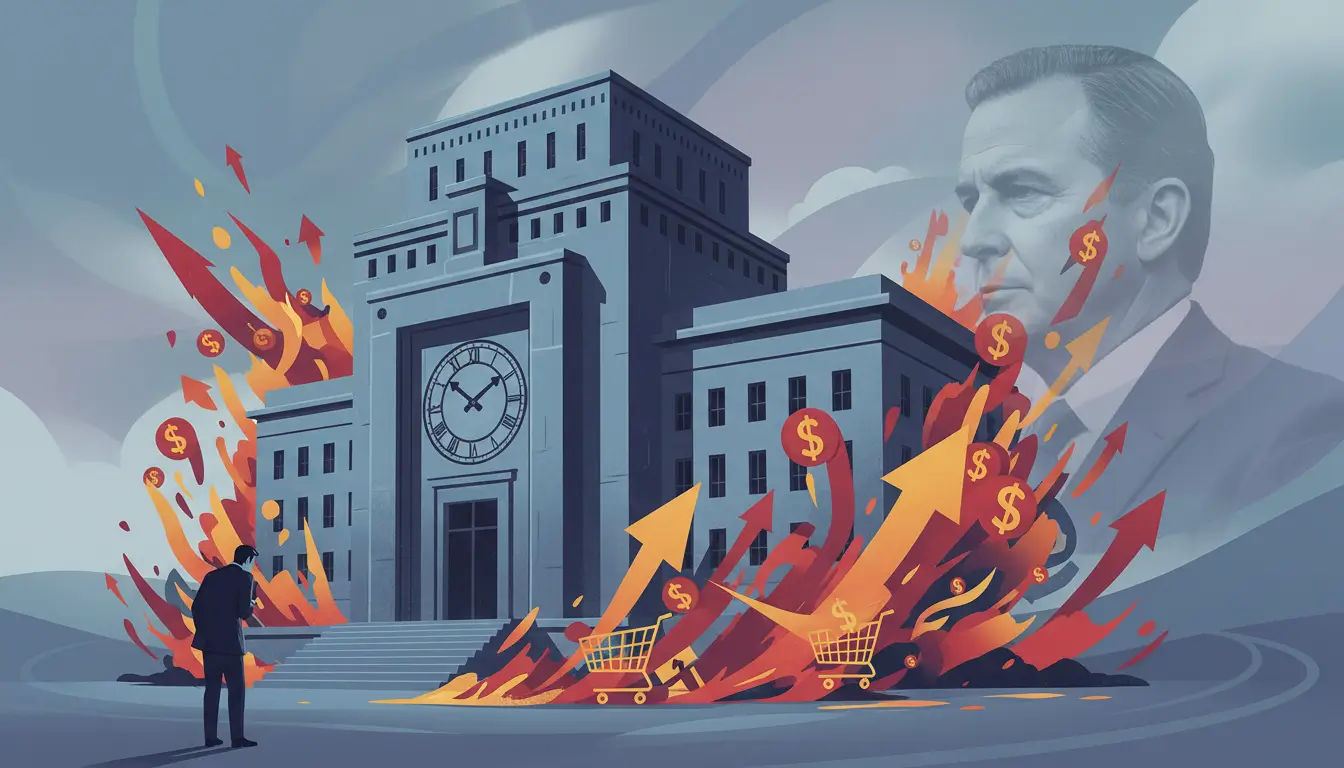
Federal Reserve Holds Rates Steady in Kevin Warsh’s First Meeting, Signals Policy Shift
Introduction
The Federal Reserve’s first policy meeting under Chair Kevin Warsh delivered no surprise on rates—but it did send a clear message. At its June 16–17, 2026 meeting, the Federal Open Market Committee kept the federal funds rate unchanged at 3.5% to 3.75%, extending a pause that has been in place since April. What mattered more for investors was the shift in tone: the Fed moved away from language implying its next step could be a cut, signaling a firmer stance as inflation pressures linger.
That makes this meeting more than a routine hold. It marks an early test of Warsh’s leadership as he succeeds Jerome Powell, and suggests the central bank is becoming less willing to lean on dovish guidance while price pressures remain elevated.
The Policy Decision and Historical Context
Warsh officially took over as Fed chair on May 22, following a narrow 54-45 Senate confirmation vote earlier in the month. His first FOMC meeting arrives at a delicate moment for the central bank, with inflation proving more stubborn than hoped and markets recalibrating expectations for the second half of the year.
The decision to keep rates steady was widely expected. A Reuters poll ahead of the meeting found that 95% of economists anticipated no change. But the removal of language pointing toward possible rate cuts marks a notable break from recent Fed communication. That shift was foreshadowed in the April 2026 meeting minutes, when three policymakers dissented because they opposed retaining an easing bias in the statement.
Warsh’s arrival appears to have accelerated that transition. He has previously expressed skepticism about heavy reliance on forward guidance, and this statement suggests a preference for giving the Fed more flexibility rather than pre-committing to lower rates.
Economic Landscape Driving Fed Decisions
The backdrop for this decision is an economy still expanding, but with inflation refusing to cool cleanly. In March, FOMC participants projected 2.4% real GDP growth for 2026 and 2.7% inflation as measured by the PCE index. More recent data, however, points to renewed price pressure, particularly from energy and shelter.
At the same time, the labor market has held up better than many expected. Job growth has averaged about 140,000 so far in 2026, well above the 10,000 average seen in 2025, while unemployment is projected to remain at 4.5%.
Key figures shaping the Fed’s stance:
- Federal funds rate held at 3.5%–3.75%
- Reuters poll showed 95% of economists expected no rate change
- March FOMC projections estimated 2026 GDP growth at 2.4%
- PCE inflation was projected at 2.7% for 2026
- Philadelphia Fed survey put current-quarter headline CPI inflation at a 6.0% annual rate
Key Insight: The Fed is no longer positioning itself as a likely rate-cutter; it is keeping its options open as inflation risks reassert themselves.
Market Implications and Investor Considerations
For retail investors, the takeaway is straightforward: the Fed may be on hold for now, but the direction of risk has shifted. Markets had largely priced in no move at this meeting, yet the policy statement reinforces the possibility that rates could stay higher for longer—or even rise later in 2026 if inflation does not ease.
That matters most for rate-sensitive areas such as housing, utilities, and high-growth stocks, which tend to struggle when borrowing costs stay elevated. It also raises the stakes for upcoming inflation reports, especially in energy and shelter, where price gains have remained persistent.
Forward-Looking Insight and Conclusion
This meeting sets the tone for the Warsh era. By removing the easing bias, the Fed has made clear it is no longer primarily focused on cushioning the economy from weakness. Its attention is shifting back toward containing inflation, even as growth remains intact.
The next few months will be critical. Investors should watch summer inflation data, any changes in voting dynamics inside the FOMC, and signals from Fed officials ahead of the July meeting. For now, the message is clear: steady rates do not mean easy policy. Under Warsh, the Fed has begun with a hold—but also with a warning.