
Key Insights
Mayor Mamdani's tax agenda includes 9.5% property tax hike, pied-a-terre tax on $5M+ homes, and estate tax exemption cut from $7.1M to $750K.
350 Park Avenue redevelopment at risk: $6B project expected to create 6,000 construction jobs and 15,000 permanent jobs.
Texas now employs 519,000 financial workers, surpassing New York's 507,000 for the first time in 2024.
JPMorgan employs 31,000 in Texas vs 24,000 in NYC, per Jamie Dimon's 2026 shareholder letter.
Key Metrics
| Metric | Value | Context |
|---|---|---|
| Citadel AUM | $67B | After 2025 capital return |
| 2025 profit distribution | $5B | Returned to investors |
| 350 Park Ave project | $6B | 6,000 construction jobs |
| Estate tax exemption cut | $7.1M to $750K | Mamdani proposal |
| Top estate tax rate | 16% to 50% | Proposed increase |
| Texas finance workers | 519,000 | vs NY 507,000 |
| Griffin penthouse | $238M | 220 Central Park South |
Introduction: A Hedge Fund Titan Reconsiders His New York Commitment
New York has long been the gravitational center of American finance. But when a firm like Citadel starts pulling back, markets pay attention.
As of May 2026, Ken Griffin’s $67 billion hedge fund is scaling back its New York City footprint, redirecting growth to Florida and reconsidering its role in the planned $6 billion redevelopment of 350 Park Avenue. The move follows Citadel’s 2022 decision to shift its headquarters from Chicago to Miami, underscoring a broader strategy of relocating toward lower-tax, more business-friendly jurisdictions.
Citadel is hardly retreating from a position of weakness. The firm began 2026 managing $67 billion after returning capital to investors, including a $5 billion profit distribution tied to its 2025 results. Since 2017, it has distributed $32 billion, and its flagship fund gained 8.5% in 2025. That makes this less a story of financial strain than one of political friction, and the costs that can follow.
The Political Catalyst: Mamdani's "Tax the Rich" Agenda
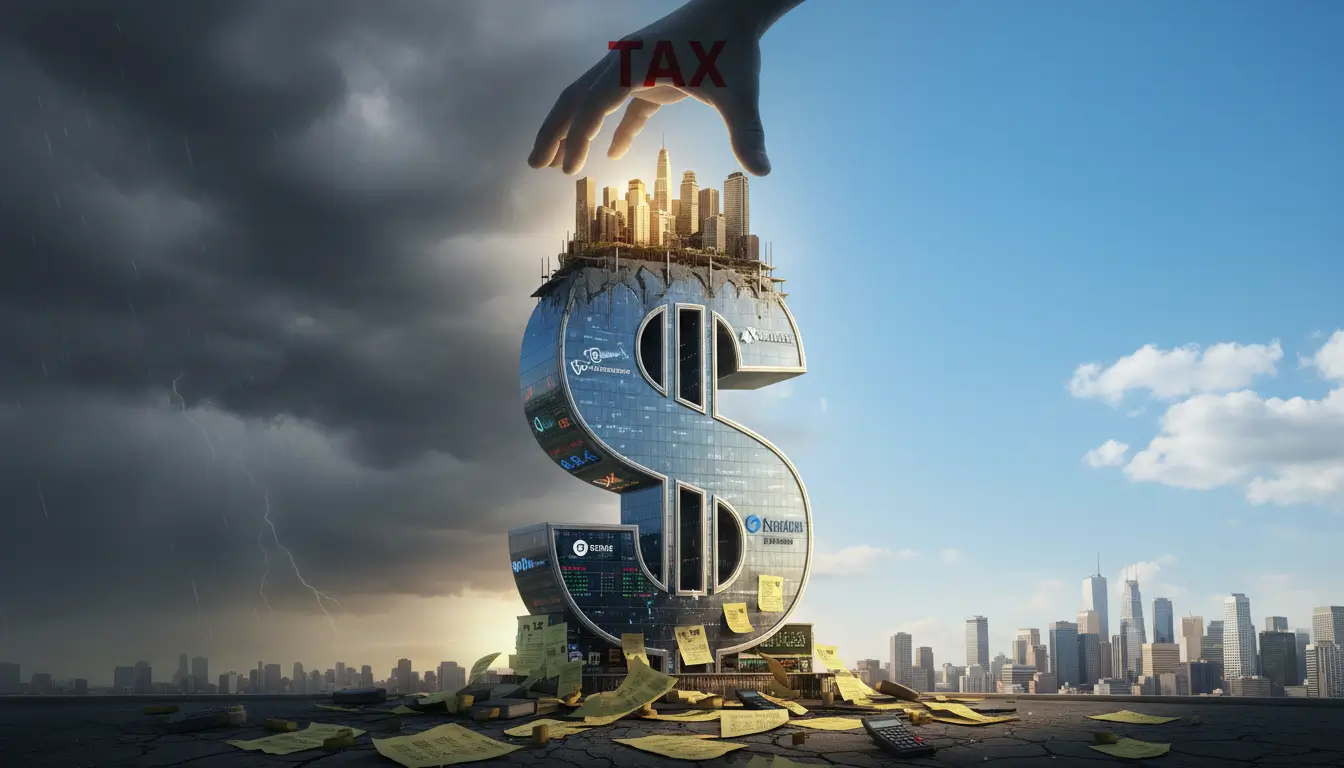
Mayor Zohran Mamdani’s tax agenda has become the flashpoint. His proposals include a 9.5% property tax increase on high-value properties, a pied-à-terre tax on secondary homes worth more than $5 million, and a sweeping overhaul of the estate tax. Under that plan, the exemption would fall from $7.1 million to $750,000, while the top rate would jump from 16% to 50%.
Supporters see the measures as a way to make the wealthy pay more. Critics see a direct challenge to the people and companies that generate a large share of the city’s tax revenue.
Tensions escalated in April 2026, when Mamdani released a video in front of Griffin’s $238 million penthouse at 220 Central Park South to promote the new taxes. Griffin later called the video “creepy” in a CNBC interview. Soon after, Citadel COO Gerald Beeson warned employees that the firm was preparing to begin the 350 Park Avenue redevelopment, an effort expected to create 6,000 construction jobs and support more than 15,000 permanent jobs, while signaling the project could be shelved.
The Economic Impact: Jobs and Investment at Stake
That warning carries weight well beyond one office tower. A project of that size would be a major boost for Midtown Manhattan, especially as the district continues to recover from post-pandemic office weakness. Early 2026 data showed improving leasing activity, rising rents, and declining vacancy rates in Manhattan commercial real estate.
Citadel’s hesitation also fits a larger pattern. Apollo Global Management has reportedly weighed a second headquarters in Florida or Texas. In his 2026 shareholder letter, JPMorgan Chase CEO Jamie Dimon noted that the bank now employs more people in Texas (31,000) than in New York City, at 24,000, and said the trend is likely to continue.
Still, New York’s obituary may be premature. JLL has argued that the “mass exodus” narrative is overstated, noting that skilled workers and younger professionals still value the city’s dense talent pool, deal flow, and career opportunities. Leasing demand from tech and AI companies has also remained resilient.
The Broader Financial Industry Context
Citadel’s decision reflects a deeper shift in how finance operates. According to 2024 data compiled by Kathryn Wylde, Texas now employs 519,000 financial sector workers, edging past New York’s 507,000. Lower taxes, lighter regulation, and cheaper operating costs have helped Sun Belt states gain ground.
At the same time, many firms are not abandoning New York so much as redesigning their footprints. Leadership and client-facing teams often remain in Manhattan, while technology, operations, and support functions expand in places like Dallas and Miami. Goldman Sachs’ planned 800,000-square-foot Dallas campus, set to open in 2028, is a clear example.
Remote work has made that model easier to sustain, giving firms more flexibility and more leverage when deciding where to invest.
Conclusion: The Future of New York's Financial Dominance
Citadel’s standoff with City Hall is more than a headline clash between a billionaire and a mayor. It is a test of how far New York can push redistribution without weakening the tax base that supports it.
For investors, the message is straightforward: watch where capital, jobs, and office demand are moving. New York still has unmatched advantages, but policy choices matter. If Citadel ultimately walks away from 350 Park Avenue, it may signal that the balance is shifting faster than many expected. If it stays, New York’s pull may prove stronger than the politics pushing against it.