
Key Insights
Rising spending pressure: Meta lifted its AI spending forecast to as much as $145 billion, raising investor questions about return timelines.
K-shaped economy: AI-enabling firms and skilled technical workers are climbing, while traditional businesses and automation-vulnerable roles are slipping.
Selective market: the broad optimism of 2025 has shifted to a more selective approach, favoring companies with scale, pricing power and proven infrastructure.
Concentration risk: smaller companies risk becoming customers of AI leaders rather than competitors, pointing toward a more concentrated economy.
Productivity test: the second half of 2026 will reveal whether AI investment generates real returns across the broader economy or only benefits a narrow group.
Artificial intelligence is reshaping markets in 2026, but the gains are landing unevenly. After a sharp selloff early in the year, AI-related stocks rebounded from their February lows, with some rising 15% to 25% by May. That recovery helped revive enthusiasm around the sector, yet it also sharpened a harder truth: the AI boom is widening the gap between the companies and workers positioned to benefit and those being left behind.
The split is most visible in capital spending. The largest tech groups are pouring extraordinary sums into data centers, chips and cloud infrastructure, turning AI investment into one of the market's dominant forces. Hyperscalers are expected to spend about $650 billion on capital expenditures in 2026, including roughly $200 billion from Amazon alone. Meta recently lifted its own AI spending forecast to as much as $145 billion, a move that sent its shares lower as investors questioned how quickly those outlays would translate into returns.
That tension now defines the market. Investors still see AI as the most important technology shift in years, but they are no longer rewarding every company that attaches itself to the theme. The broad optimism of 2025 has given way to a more selective approach, with capital flowing toward businesses that control essential parts of the AI supply chain or can show credible paths to monetization. Companies with vague promises are being marked down. Those with scale, pricing power and proven infrastructure are pulling further ahead.
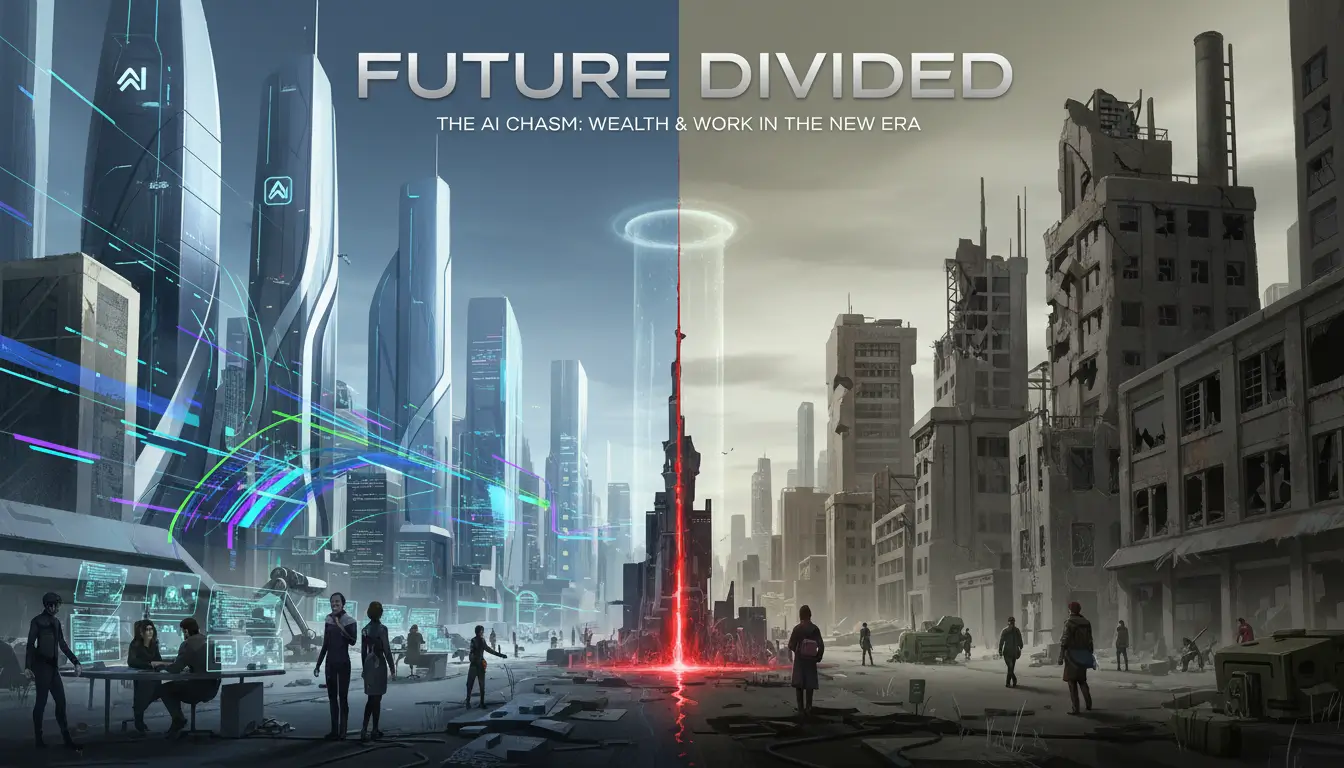
The economic effects are becoming just as stark. Analysts increasingly describe the current backdrop as a K-shaped economy, where one side climbs while the other slips. AI-enabling firms, chipmakers and highly skilled technical workers are seeing rising demand, stronger margins and expanding market value. Many traditional businesses, meanwhile, face a different reality: higher costs, pressure to automate and fewer clear ways to keep pace.
This divide extends beyond corporate earnings. Workers with expertise in software, data engineering and machine learning are gaining leverage, while employees in roles vulnerable to automation face greater uncertainty. Smaller companies are under similar strain. Few can match the spending power of the largest technology groups, and many risk becoming customers of the AI leaders rather than competitors. That dynamic raises the prospect of a more concentrated economy, with wealth, productivity gains and market influence accruing to a narrow group of firms.
Key Metrics
| Metric | Value | Context |
|---|---|---|
| Hyperscaler capex 2026 | ~$650B | Total expected capital expenditures |
| Amazon capex | ~$200B | Largest single hyperscaler contributor |
| Meta AI spend forecast | Up to $145B | Raised forecast, investor concern on returns |
| AI stock rebound | 15-25% | From February lows to May 2026 |
| Economy shape | K-shaped | Winners climb, losers slip |
Markets are trying to sort out whether this concentration is a temporary phase or a more lasting feature of the AI era. The answer will depend on whether current spending produces measurable productivity gains across the broader economy. If AI helps lower costs, lift output and create new demand beyond the technology sector, the benefits could spread more widely over time. If not, the result may be a market that keeps rewarding a handful of dominant players while leaving the rest to absorb the disruption.
The second half of 2026 will offer a clearer test. Earnings reports should show whether AI investment is beginning to generate real returns, not just higher expectations. Productivity data, hiring trends and corporate guidance will matter more than grand strategy presentations. For investors, the lesson is straightforward: AI remains a defining market force, but this is no longer a story of rising all boats. It is a story of selection, scale and adaptation, and the cost of falling behind is getting higher.